

Claude Cowork vs Claude Code: which does your team need?
Most staff need Claude, which now includes Cowork, for reports, documents and research. A few builders need Claude Code, on the same Team seat.

Short answer: Claude Cowork is for the people who run the business, and Claude Code is for the people who build software. Cowork, which Anthropic folded into the main Claude app on 16 September 2026, takes a goal and works through your files and connected apps to hand back a finished report, document or piece of research. Claude Code reads a codebase, edits files and runs commands, and it lives in the terminal, the code editor, the desktop app and the browser.
The one-line difference: Cowork does knowledge work for anyone, and Claude Code does software work for someone who can read the code it writes. Both come with every paid business seat. You are not choosing a product to buy. You are deciding who uses which, and with what settings.
For a 50 to 250 person business the split is usually simple. Most staff get a standard Team seat and use Claude, including what used to be called Cowork, for reports, documents and research. A handful of builders, usually your HubSpot admin, a developer or two and whoever owns your integrations, use Claude Code on the same plan.
What changed on 16 September: Cowork is now Claude
On 16 September 2026 Anthropic announced that Cowork and chat are merging into one Claude. You no longer choose a mode first. You type into one message box, and Claude brings in the agentic abilities when a task needs your files or apps. The same day Anthropic launched Claude Docs and Claude Slides, so Claude can co-write a document or draft a deck you can edit, present or download as PowerPoint or PDF. Anthropic says Docs, Slides and Design are in beta on paid plans.
The rollout is uneven, so check which version your people have:
- Pro, Max and Ultra. Rolling out over the weeks after the announcement, with nothing to switch on.
- Enterprise. Generally available from 23 October 2026. When it announced the merge, Anthropic said Enterprise admins would hear from it at least 30 days before anything changed for their organisation. Its Enterprise admin guide now sets the date: in existing Enterprise organisations the new experience is off by default and turns on automatically on 16 November 2026, unless an owner chooses Keep disabled first. Owners see that notice under Organization settings, Capabilities.
- Team and Free. Anthropic says these follow "soon" and gives no date. On Team today, Cowork still sits next to chat.
One more change matters for a GM. In the merged Claude, Anthropic says Claude asks before taking an action by default. You can change that so it keeps working and checks in only when something needs a closer look. Claude Code is not part of the merge. It keeps its own apps, its own settings and its own usage line in the admin reports.
- 16 September 2026Anthropic announces Cowork and chat are merging into one Claude, and launches Claude Docs and Claude Slides.
- From 16 September 2026Rolling out on Pro, Max and Ultra over the following weeks.
- 23 October 2026Generally available on Enterprise.
- 16 November 2026Existing Enterprise organisations switch on automatically, unless an owner keeps it off.
- No date givenTeam and Free plans. Anthropic says "soon".
Dates from Anthropic's announcement and its Enterprise admin guide, checked 11 November 2026.
Claude Cowork vs Claude Code, side by side
| Claude (with Cowork) | Claude Code | |
|---|---|---|
| Who uses it | Anyone: ops, finance, sales, marketing, HR coordinators, project managers | Developers, your HubSpot admin, anyone who builds or maintains software |
| Where it runs | Claude desktop app (macOS, Windows, Linux in beta), web and mobile. Web and mobile are in beta on Team | Terminal, VS Code, JetBrains, the desktop app's Code tab, the browser at claude.ai/code, plus CI through GitHub Actions or GitLab |
| What it can touch | Folders you connect, connected apps such as Microsoft 365, the web, and cloud sessions on Anthropic's servers | A code repository: it reads files, edits them, runs commands and tests, and opens pull requests |
| How it asks before acting | The merged Claude asks before acting by default. In Cowork as it runs on Team today, new tasks start in Automatically approve. In Cowork on Enterprise, they start in manual approval | Reads freely in the working folder. Asks before editing files and before most shell commands, unless someone changes the mode |
| Plans and price | Every paid plan. Team standard seat US$20 a month billed yearly, US$25 monthly | Every paid plan, the same seat. Premium seat for heavy users US$100 billed yearly, US$125 monthly |
| Admin controls | Turn it off for the organisation, remove Automatically approve, require approval on connector writes, stream events to your security tools | Managed settings with allow and deny rules developers cannot override, and the option to disable the skip-permissions mode |
Prices are as Anthropic's pricing page lists them in US dollars. Australian visitors are shown local prices with GST at checkout, and our Claude pricing guide for Australia lists them. Enterprise is US$20 a seat a month billed yearly, with a 20-seat minimum, and usage on top at API rates.
Which of your people actually need Claude Code?
We build on Claude for Australian businesses: agents, integrations and tools connected to HubSpot and your other systems. Talk to Matt about what you want to build.
What does each one actually do in a business?
The easiest way to decide is to list the jobs people do. If the output is a document, a spreadsheet or an answer, it belongs in Claude. If the output is code, a script or a change to a system's configuration, it belongs in Claude Code.
Ops and the rest of the business, in Claude:
- Weekly reports. Point it at the export folder and ask for the operations summary in last week's format, with the three numbers that moved.
- Documents. A policy draft, a tender response, a board update or an onboarding guide, written in Claude Docs and finished by a person.
- Research. Supplier comparisons, a summary of a new regulation with links, or background on a prospect before a meeting.
- Decks. A first draft of the monthly sales slides in Claude Slides, downloaded as PowerPoint.
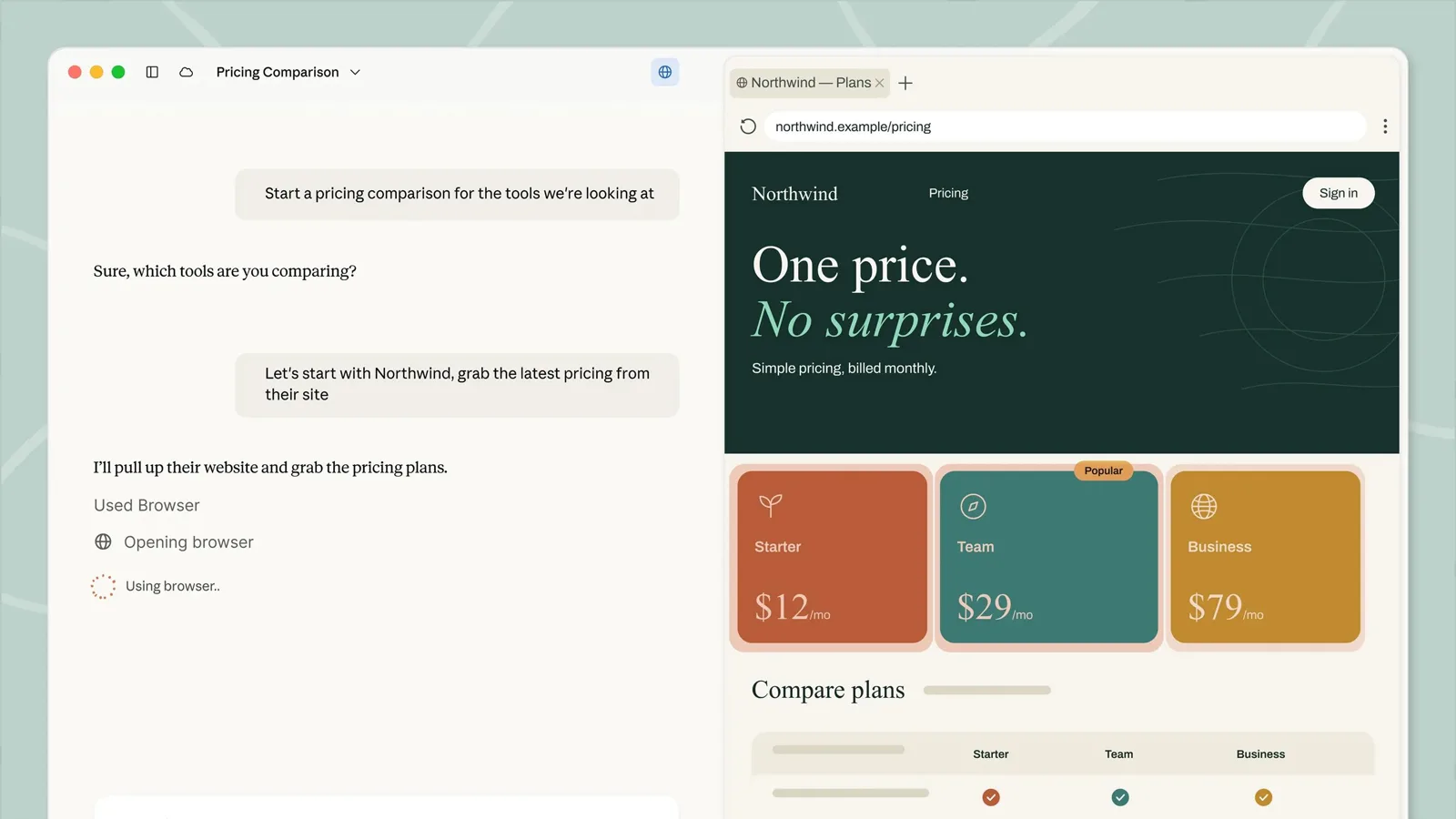
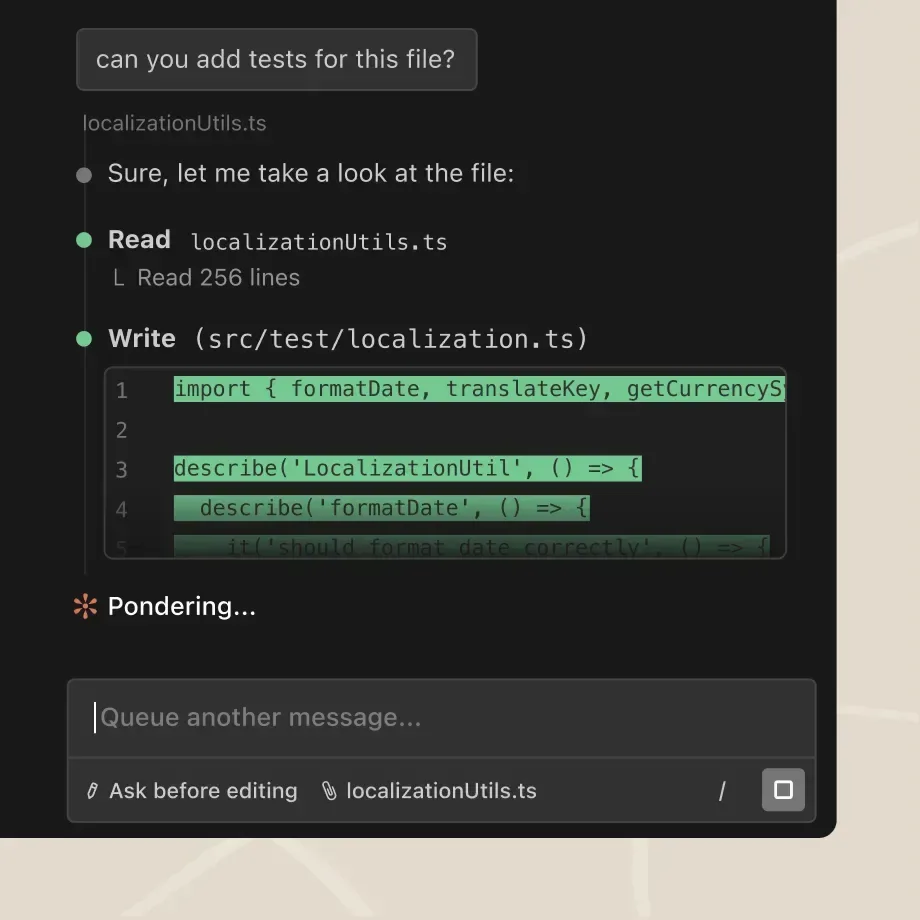
Builders, in Claude Code:
- HubSpot custom code actions. The JavaScript that runs inside a HubSpot workflow to format data, call another system or score a record, written and tested before anyone pastes it in.
- Integrations. The small services that move data between HubSpot, your ERP, Xero or a booking system, with tests that run every time someone changes them.
- Internal tools. A quoting calculator, a data clean-up script or an internal page your team uses daily.
Our post on Claude Cowork for business goes deeper on the file and connector side, and Claude Code for business covers the engineering settings. If you want to know what changes in a team that gives its engineers Claude Code, read what happens when you give your engineers Claude Code.
How should you roll them out, and in what order?
Start with Claude for the business, then add Claude Code for the builders. It comes down to risk. A person can check a report in a minute. A script that writes to your CRM needs a review process before it runs, and that process takes longer to set up.
- Set the plan and owners. Team covers 2 to 150 seats. Above 150 people, or if you need SCIM, audit logs or custom retention, you are looking at Enterprise. Our comparison of Claude Team vs Enterprise walks through the triggers.
- Decide how Claude asks. Cowork on Team starts new tasks in Automatically approve, and the admin setting "Allow Automatically approve mode" is on by default. Turn that setting off for the first month so every action needs a person's approval. Leave "Always allow" for connector tools off, which is its default, so Claude asks each time it wants to use a connected app's tools.
- Pilot one team. Pick a team with weekly, repeatable jobs and give each job its own folder.
- Then the builders. Deploy Claude Code managed settings before anyone installs it. Deny reads of secrets files, disable the mode that skips permission prompts, and make the managed rules override anything a developer sets.
- Watch usage. Move someone to a premium seat only when they keep reaching their limit.
Team and Enterprise owners can stream Cowork events, including tool calls and approval decisions, to their security and logging tools.
What does it cost for a 100-person team?
Take 100 people on Team, billed yearly, using the US dollar prices Anthropic publishes. Ninety-five staff on standard seats and five builders on premium seats:
| Option | Monthly, US$ | Yearly, US$ |
|---|---|---|
| Team, 100 standard seats, billed yearly | $2,000 | $24,000 |
| Team, 95 standard and 5 premium, billed yearly | $2,400 | $28,800 |
| Team, 95 standard and 5 premium, billed monthly | $3,000 | $36,000 |
| Enterprise, 100 seats, billed yearly | $2,000 plus usage at API rates | $24,000 plus usage |
Claude Code is included on a standard seat, so you do not need premium seats to give builders access. Premium gives five times a standard seat's usage, which matters for someone working in Claude Code all day. Start builders on standard and upgrade the ones who reach their limit. The Enterprise seat price covers access only, so the true figure depends on how hard your people use it.
When do you need neither, and need a built agent?
Claude and Claude Code both need a person to start the task and look at the result. Some jobs should run with nobody at a keyboard: every new enquiry triaged in HubSpot within a minute, overdue invoices followed up each morning, a quote drafted the moment a deal reaches a stage. Those need a built agent that runs on a trigger, calls the Claude API, reads and writes your systems with its own limited permissions, and logs every step.
This video from our YouTube channel looks at build versus buy, and where AI budgets get wasted.
Signs you are there:
- The job happens hundreds of times a month and nobody wants to open Claude to start each one.
- The output goes to a customer or into a system of record, so it needs fixed rules, testing and a fallback.
- Several systems are involved, such as HubSpot, Xero and a booking tool, and the order of steps matters.
A builder will often write that agent in Claude Code, using Anthropic's Agent SDK, and then it runs on its own. Cassy Woodforth, who wrote this post, holds Claude Certified Developer: Foundations, and this is the kind of build our team scopes. AI projects start from A$10,000 ex GST, and ongoing AI partnerships from A$8,500 a month ex GST, as listed on our AI consulting page.
Frequently asked questions
What is the difference between Claude Cowork and Claude Code? Cowork does knowledge work across your files and apps and hands back documents, reports and research. Claude Code works in a code repository, editing files and running commands for developers.
Is Claude Cowork still a separate product? No. On 16 September 2026 Anthropic announced Cowork and chat are merging into one Claude. It reached general availability on Enterprise on 23 October 2026, and Anthropic says Team and Free follow soon.
Is Claude Code included in the Claude Team plan? Yes. Claude Code is included on Team standard and premium seats, and on every other paid plan. The Free plan does not include it.
Do non-technical staff need Claude Code? Usually not. If the output is a document, a report or research, Claude covers it. Claude Code suits people who can review code before it runs.
How much does Claude cost for 100 staff? On Team billed yearly, 100 standard seats are US$2,000 a month as Anthropic lists it. Swapping five for premium seats takes it to US$2,400 a month.
Sources
- Cowork is now Claude, Anthropic, checked 11 November 2026, for the 16 September merge, rollout by plan, Enterprise availability on 23 October, the 30-day notice, Claude Docs and Slides, and asking before acting.
- Set up and manage the new unified Claude experience for your Enterprise organisation, Claude Help Center, checked 11 November 2026, for the 16 November switch-on and Enterprise admin controls.
- Cowork for Team and Enterprise plans, Claude Help Center, checked 11 November 2026, for default approval modes, admin settings, platforms and event streaming.
- Claude pricing, Anthropic, checked 11 November 2026, for seat prices in US dollars, the 2 to 150 seat range, premium usage and Claude Code inclusion.
- Claude Code overview, Claude Code documentation, checked 11 November 2026, for where it runs, what it does and the Agent SDK.
- Claude Cowork, Anthropic, checked 11 November 2026, for the product image of Cowork.
- Claude Code, Anthropic, checked 11 November 2026, for the product image of Claude Code.
- Configure permissions, Claude Code documentation, checked 11 November 2026, for approval rules, managed settings and disabling the skip-permissions mode.
We build on Claude for Australian businesses, from agents to the integrations that connect them to HubSpot and your other systems. Read about our AI engineering work.
What would you build on Claude?
Talk to Matt about what you want to build on Claude. He can explain how we work and whether our AI engineering services fit what you need.