 1300 71 61 41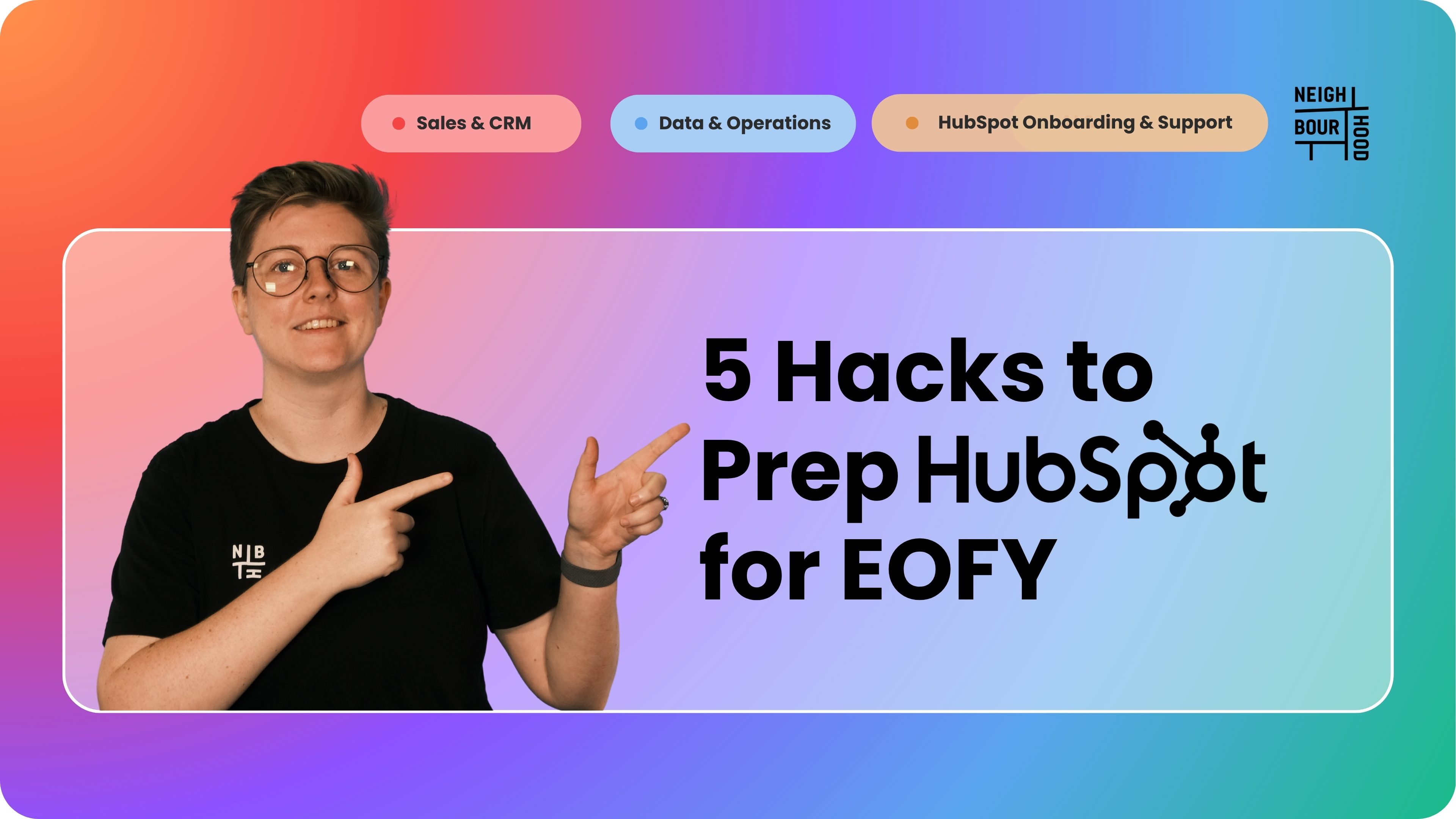
EOFY is the one time of year your HubSpot portal gets honest with you.
The deals that were never going to close stop hiding behind optimistic close dates. The contacts who went quiet two years ago are still sitting in your database, quietly dragging down your engagement rates. And the reporting you've been meaning to fix becomes the reporting you actually need, today, for numbers that matter.
The good news: most of this is fixable in an afternoon.
We've been deep in HubSpot for over 11 years, and we're a Diamond HubSpot Partner. These aren't theoretical EOFY tips, they're the same cleanups we run for clients every year-end. We've pulled five of them into one checklist, in the order we'd actually run them. No gate, no catch. Each one links to the full how-to.
The hacks we're covering:
- Hack 1: Score your open deals and find what's actually real
- Hack 2: Walk into every closing call prepared
- Hack 3: Clean the dead weight out of your database
- Hack 4: Make your year-end reporting work natively
- Hack 5: Build reporting windows that don't break next year
- FAQ
Hack 1: Find out which deals are actually real
The pipeline cleanup. Run this first.
Three weeks out from EOFY, half your pipeline is fiction. The hard part is knowing which half. Chasing a deal that was never going to close is the most expensive way a rep can spend the run-in to year-end.
This hack scores your open deals against three things that actually predict whether a deal is real: is the next step defined or just "follow up," is the close date credible or has it quietly slipped past, and is the amount backed by a quote or a round-number guess. Five minutes, a ranked hit list, and a much shorter standup.
Run it first. It tells you where to point everything else.
→ HubSpot Deal Scoring: Find At-Risk Deals in Minutes
Hack 2: Walk into every closing call prepared
The deal you can still save.
Once you know which deals are worth fighting for, the next move isn't winging the call. EOFY closing conversations are too important to run on a two-minute scroll through the deal record while the call connects.
This hack pulls the contact, the stage, and your last few notes into a 30-second call card: what matters most to this person right now, their most likely objection, and the one question that moves the deal forward. The difference between a closing call and a catch-up call.
→ How to Get a 30-Second Pre-Call Brief from Any HubSpot Deal
Hack 3: Clean the dead weight out of your database
The fresh start.
A new financial year is a good excuse to stop carrying contacts who haven't opened an email since the last one. They inflate your numbers, drag your sender reputation, and make every engagement rate look worse than it is.
This hack scores your unengaged contacts and hands you two things: a shortlist of who's genuinely worth one more personal email, and a clear read on how much dead weight you're carrying into the new financial year. It also covers the consent side properly, because feeding contact data into AI without checking that's how you end up with a different kind of EOFY problem. HubSpot's own graymail suppression pairs neatly with it once you've found the contacts worth keeping.
→ How to Score Your Dead HubSpot Contacts in 5 Minutes
Want the full archive? We've pulled together The Ultimate HubSpot Hacks of 2026 - ten more builds covering AI, Buyer Intent, contracts, and reporting. A good read once the EOFY dust settles.
Hack 4: Make your year-end reporting actually work
The reporting fix.
If you've ever needed "date of first deal" or "latest activity" on a company record for a year-end report, you'll know it used to mean custom code or a calculated-property headache. HubSpot finally does it natively.
This hack walks through three date rollup properties worth building before you pull your EOFY numbers: nearest upcoming close date, latest ticket activity, and earliest contract start date. Build them once and your reports stay accurate without anyone touching them.
→ HubSpot Rollup Properties: Get Earliest and Latest Dates
Hack 5: Build reporting windows that don't break next year
The one for the RevOps crew.
HubSpot's built-in date filters are fine for "this quarter." They fall apart the moment you need a rolling window that stays accurate as the calendar moves - exactly the kind of thing that bites you the first month of a new financial year.
This hack uses a scheduled workflow to keep custom date properties current automatically, so your rolling reports don't quietly break on July 1. Slightly more advanced, but it's the one that saves you the most reporting pain over the next twelve months.
→ How to Build Rolling Date Filters in HubSpot Using Scheduled Workflows
The honest part
None of these stop mattering on July 1.
A pipeline you can trust, a database that isn't bloated, and reporting that holds up aren't EOFY problems. They're the difference between a HubSpot portal that runs your business and one your team quietly works around. EOFY is just the deadline that makes you finally deal with them.
Run the five above and you'll be in better shape than most. But if the bigger picture is the issue - a pipeline that should score itself, a database that stays clean without a quarterly cleanup, reporting that doesn't need a hero every year-end - that's the work we actually do.
We're a Diamond HubSpot Partner. We build the systems these hacks are a taste of. If your HubSpot needs more than an afternoon can fix, give us a shout and we'll set it up properly for the new financial year.
Want the next one before everyone else?
These hacks land in Ops Intel first - our newsletter for HubSpot admins and RevOps crews who'd rather get the good stuff in their inbox than go looking for it. Practical, no fluff, no padding. Subscribe to Ops Intel now.
And if you'd rather watch someone click through a build than read about it, we're on YouTube and Instagram sharing the same hacks with the actual screens. Come find us.
Frequently Asked Questions
1. When is EOFY in Australia and why does it matter for HubSpot?
The Australian financial year ends on June 30. For HubSpot users, it's the natural deadline to clean up your pipeline, database, and reporting - partly for accurate year-end numbers, partly because starting the new financial year with a clean portal saves you months of compounding mess.
2. What's the first thing I should fix in HubSpot before EOFY?
Your open pipeline. Knowing which deals are genuinely going to close lets you focus your last few weeks where they count. Start with deal scoring, then work outward to database and reporting.
3. Do I need a paid HubSpot plan to run these hacks?
It varies by hack. Deal scoring, the pre-call brief, and dead-contact scoring mostly use a CSV export plus an AI tool, so they work on most plans. Date rollup properties and scheduled-workflow date filters need Professional or Enterprise tiers. Each linked guide lists the exact plan requirement.
4. Is it safe to put HubSpot contact data into ChatGPT or Claude?
Only with the right precautions. Check you have a lawful basis to process the data, minimise what you export (you rarely need names), and use an enterprise or team AI account, which doesn't train on your data. The dead-contacts guide covers the consent side in full.
5. Can these hacks be automated so I'm not doing them every year?
Yes - and that's the bigger play. Deal scoring, database hygiene, and rolling reports can all be built into your portal so they run continuously instead of as an annual scramble. That's the kind of system we build for clients. Give us a shout if you want it set up properly.
References
[1] HubSpot Knowledge Base: Create Calculation and Rollup Properties
[2] HubSpot Knowledge Base: Understand Graymail Suppression
[3] HubSpot Knowledge Base: Export Records
[4] HubSpot Knowledge Base: Create Workflows
Tried any of these? Found a better EOFY cleanup we missed? Give us a shout. We're always up for talking HubSpot.


.svg)