

155% more deals tracked. Every one on the same page.
An energy technology company whose sales ran on ad-hoc processes. So we built one from scratch.
- Client

- Project lead
 Trav WhiteFounder and Head of AI Engineering
- Industry
- Energy and solar technology
- Platform
- HubSpot Sales Hub
- Scope
- Pipelines, automation, reporting, training
- Award
- 2021 Impact Awards
01 The briefBuild SwitchDin's sales process in HubSpot from scratch, automate the admin around each deal, and give the executives reporting they can pull on demand.
Every customer handled differently.
SwitchDin makes a platform for monitoring and remotely managing solar systems, batteries and other energy loads. It sells to electricity providers directly, and through intermediary businesses.
SwitchDin already had HubSpot, but its team used it to different degrees, so every customer was being dealt with differently. Sales ran on ad-hoc processes, and with no defined process and little data captured consistently, nobody could see which deals were coming in or going out, or where the bottlenecks were.
It had stayed that way because there was no process to put into HubSpot. The software was not the gap. What was missing was an agreed sales process for the tool to run, and the reporting to show whether it was working.
What SwitchDin needed
- A defined sales process. In HubSpot, the same for every deal and every customer.
- Training on the tools. What HubSpot could already do for internal operations.
- Reporting that is simple. Easy to use and easy to read.
Two ways to buy, two pipelines.
SwitchDin sells two ways, and each needs a different level of involvement from its staff. So instead of one pipeline bent to fit both, there are two, built from scratch.
Electricity providers, direct
Larger ticket deals, sold business to business.
- Larger ticket electricity providers
- A direct business to business sale
- Its own level of staff involvement
Intermediary businesses
Deals that come through a partner business.
- Businesses that sit between SwitchDin and the end customer
- A sale through a partner
- Its own level of staff involvement
The same rules in both. Every stage gives the deal owner an automated series of tasks with a checklist, so each team member asks clients for the same things before a deal can be won. Deals pass four gates for sign-off. At the right moment, an automated email asks the Executive Sponsor or Technical Lead to review the opportunity and give permission to prepare the bid, so the people who need to act are told when it matters, and not copied on every stage.

One tick, and the paperwork is ready.
Every bid needs the same set of documents. Setting them up by hand took the sales team away from the RFPs and proposals themselves, so Zapier and Google Drive now do it for them.
A deal property is ticked in HubSpot
The salesperson ticks "Google Drive Automation" on a new deal, and the change triggers the Zap.
The template is copied in Google Drive
A Deal Zip File template is cloned, holding the Google Sheets SwitchDin uses to build its RFPs and proposals.
It is filed in the deal's folder
Zapier finds the right folder in Google Drive, so every deal's documents live together.
The deal is updated in HubSpot
The deal record is updated, and the folder becomes the salesperson's one list of what is still to do before the client can move forward.

Published on the original case study. It runs in both pipelines, so every deal starts with the same documents in the same place.
Workshops first, then HubSpot.
The process was agreed with SwitchDin before anything was built, and the reporting was agreed before any data went into it.
Starting from scratch, Discovery
With no settled sales process or reporting to keep, the process could be designed fresh.
A reporting wishlist from the kick-off
Sales pipeline workshops, Several of them
Usually one workshop covers a pipeline. The four sign-off gates took several, to work out which metrics mattered, how deals moved today, and how HubSpot could help both staff and reporting.
Four gates for sign-off on deals
Wireframing the process, In Miro
The whole process mapped with SwitchDin before it went into HubSpot, marking where automation and notifications would help staff.
Approved before the build
Reporting from the wishlist, Databox
Dashboards first built with dummy data and approved, then connected: sales, marketing, customer support and service, integrated with HubSpot.
Deals in and out, on demand
Training, Three sessions
Two with SwitchDin's project lead, so he could teach new starters and keep improving the process, then a workshop on the Sales Hub tools for the sales team and executives.
SwitchDin owns the process
Why it kept improving
Training aimed at one owner
Two of the three sessions went to SwitchDin's project lead, Marcelo, who took the project on and made it his own.
Reports on request
He can improve the process for his team and pull reports for the executives at a moment's notice.
Improving during the build
Even during implementation, we were looking for ways to improve the process, and SwitchDin kept finding more as HubSpot offered more.
Every deal on the same process, and on the record.

Every rep selling a different way?
Four goals. Here is what came of them.
What SwitchDin asked for before the project started, and where it stood once it was live.
Goal 01
A defined sales process, the same for every customer
We built two pipelines from scratch, with sign-off at four points in every deal and a checklist of tasks for the deal owner at every stage.
153%
more team activity logged in HubSpot. Every stage asks each team member for the same things, so tasks and customer interactions are on the record for every contact.
Goal 02
Support, and advice on getting more from HubSpot
We ran three training sessions: two with the project lead on HubSpot and the tools built for SwitchDin, and one on Sales Hub for the sales team and executives.
3
training sessions, two of them with SwitchDin's project lead. He can now train new starters and keep improving the process for his team, so SwitchDin owns the process.
Goal 03
See the deals coming in and going out
We built both pipelines in HubSpot, and set up the deal folder automation so every deal starts with its documents in the same place.
155%
more deals tracked in an average month. A process that used to be ad-hoc now runs the same way for every deal, so the sales team can pinpoint the bottlenecks.
Goal 04
Reporting that is simple to use and read
We built Databox dashboards for sales, marketing, customer support and service, connected to HubSpot and built from the kick-off wishlist.
On demand
accurate data for the executive team. The dashboards were built from the wishlist agreed at kick-off, and the project lead can pull reports for the executives at a moment's notice.
Put together, SwitchDin went from every customer being handled differently to one sales process that the whole team follows and HubSpot tracks. The executives can see what the team puts in and what comes out of it.
The process is also SwitchDin's to run. Its project lead trains new starters, keeps improving the process and pulls the reports, and each time SwitchDin took on more of what HubSpot offers, another chance came up to simplify how its sales team works.

“I've had engagement with other agencies in the past and I would rate Neighbourhood as one of the best experiences I've had with a marketing agency. The quality of the support, the advice that was given, the professionalism as well but also the communication ... we tackled some pretty heavy problems but we managed to over come them. It also exposed us to some tools we weren't familiar with.”
 Marcelo Carvalho
SwitchDin
Who ran it
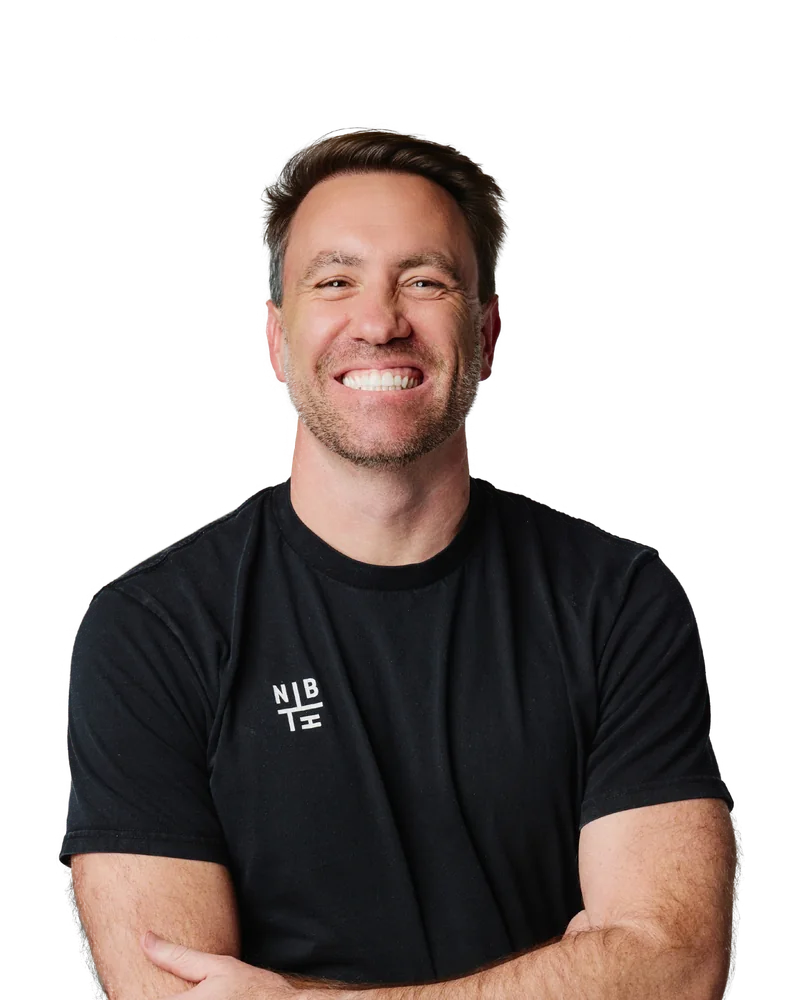
Trav WhiteFounder and Head of AI Engineering
Led the pipeline workshops, two pipelines, deal folder automation, Databox reporting and team training.
HubSpot Certified Trainer, Multi HubSpot Impact Award winner, Founded Neighbourhood in 2015
HubSpot, but no sales process in it?
The neighbours next door.
The closest builds to this one, ranked by industry, HubSpot hub and service.